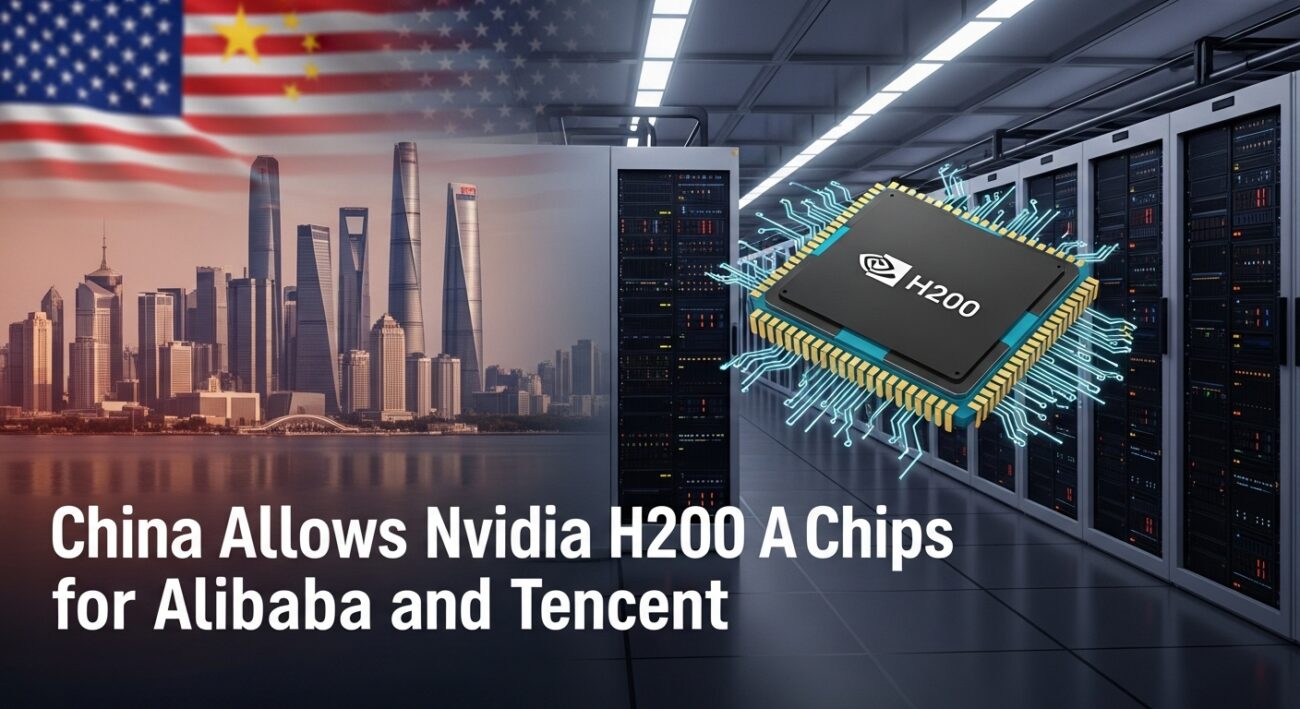
China has quietly but decisively taken a strategic step in the global technology race. Beijing has given the green light for domestic technology giants such as Alibaba and Tencent to import Nvidia’s H200 artificial intelligence chips, signaling a major shift in China’s short-term AI strategy and intensifying the geopolitical competition with the United States.
The approval comes amid years of escalating restrictions on advanced semiconductor exports, particularly from the US to China. While Washington continues to tighten controls on cutting-edge AI hardware, the H200’s entry into China underscores how artificial intelligence has become the central battleground in global power dynamics.
What Is the Nvidia H200 and Why Does It Matter?
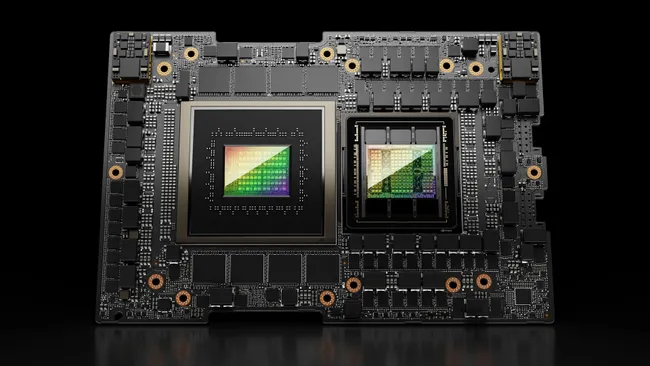
The Nvidia H200 is one of the world’s most powerful AI accelerators currently available for large-scale commercial deployment. Built on Nvidia’s Hopper architecture, the H200 is designed to handle extreme workloads such as:
- Training large language models (LLMs)
- High-performance AI inference
- Data-intensive analytics at hyperscale
Compared to previous generations, the H200 offers dramatically higher memory bandwidth and improved efficiency, making it particularly well-suited for generative AI, real-time recommendation systems, and advanced multimodal models.
In the global AI ecosystem, the H200 is considered a critical infrastructure component not just a chip, but a foundation for competitive AI platforms.
Why Alibaba and Tencent Need the H200
For Alibaba and Tencent, access to the H200 is less about prestige and more about survival in an increasingly competitive AI market.
Alibaba
Alibaba plans to deploy H200 chips primarily within Alibaba Cloud, strengthening its AI-as-a-service offerings. The chips will enable faster model training, lower inference latency, and more scalable enterprise AI solutions key to competing with global cloud leaders such as AWS and Google Cloud.
The H200 also supports Alibaba’s ambitions in generative AI, smart logistics, and intelligent commerce systems.
Tencent
Tencent is expected to use the H200 to boost AI performance across multiple sectors, including gaming, content recommendation, advertising, and social platforms. The chip will also enhance research capabilities at Tencent AI Lab, accelerating innovation in conversational AI and multimodal systems.
For both companies, the H200 acts as a bridge allowing continued AI growth while China accelerates development of domestic semiconductor alternatives.
A Strategic Shift by Beijing
China’s approval of the H200 import reflects a pragmatic recalibration. While Beijing continues to push aggressively for semiconductor self-sufficiency, it also recognizes the immediate need for world-class AI hardware to avoid falling behind global competitors.
Rather than an ideological retreat, the move represents a dual-track strategy:
- Short-term access to advanced foreign chips to sustain AI development
- Long-term investment in domestic chip manufacturing and design
This balancing act highlights China’s understanding that AI leadership cannot wait for full technological independence.
Geopolitical Implications: A New Phase in the US–China Tech War
The arrival of Nvidia H200 chips in China marks a new phase in the technological standoff between Beijing and Washington.
From the US perspective, export approvals for chips like the H200 are tightly controlled and framed as limited, non-military transactions. From China’s perspective, even constrained access helps preserve momentum in the AI race.
Artificial intelligence has now joined semiconductors, energy, and defense as a core pillar of geopolitical competition. Control over AI infrastructure increasingly translates into economic power, technological influence, and national security leverage.
The H200 decision demonstrates that despite political tensions, mutual dependence in the global tech supply chain remains difficult to fully unwind.
AI Chips as Strategic Assets
China’s decision to allow Nvidia H200 chips into its domestic market is more than a commercial approval it is a strategic signal.
By empowering Alibaba and Tencent with advanced AI hardware, Beijing is buying time, capability, and leverage in the global AI race. At the same time, it underscores a broader reality: in the era of artificial intelligence, chips are no longer just technology products they are geopolitical assets. As the US and China continue to navigate competition and interdependence, decisions like this will shape not only the future of AI, but the balance of power in the digital age
