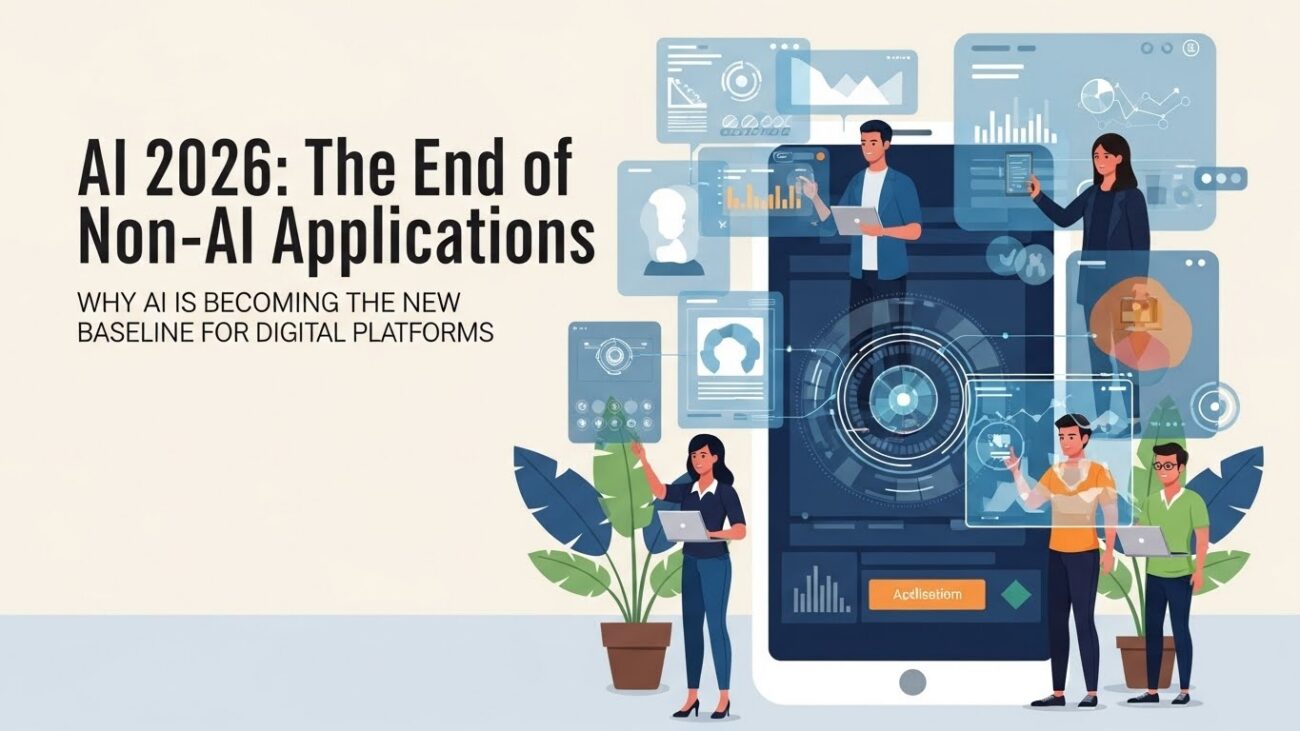
A Structural Shift in Digital Applications
For years, popular digital platforms evolved without presenting artificial intelligence directly to users. Facebook, Instagram, Snapchat, and TikTok relied on algorithms working quietly in the background. However, between 2024 and 2025, a structural shift began to reshape the industry.
AI moved from being an invisible system to a visible, user-facing tool. This change was not cosmetic. It reflected a deeper transformation in user expectations. By 2025, applications that embedded AI directly into the user experience consistently showed higher engagement, stronger retention, and greater perceived value. These patterns provide a clear foundation for projecting where AI is heading in 2026.
How Major Platforms Integrated AI Into Their Core Products
Facebook and Meta AI: The Most Compelling Case Study
Before 2023, Facebook focused on social feeds, groups, pages, and advertising. AI was already present, but it operated behind the scenes, ranking content and optimizing ads without direct interaction.
That model changed when Meta introduced Meta AI across Facebook, Instagram, and WhatsApp. Instead of launching a separate app, Meta embedded AI directly into existing platforms. Users could now interact with AI as a conversational assistant, explore information, generate content ideas, and receive intelligent recommendations.
By 2025, Meta AI reportedly reached around one billion monthly active users. This growth did not come from a new product, but from upgrading legacy platforms with AI. From a business perspective, this confirmed a critical insight: integrating AI into established applications can restore relevance and accelerate usage at scale.
Snapchat: From Social Messaging to an AI Companion
Snapchat was originally known for ephemeral photo and video messaging. The introduction of My AI, placed directly within the chat interface, marked a fundamental shift.
The AI assistant allows users to ask questions, receive recommendations, and engage in ongoing conversations. As a result, user session duration increased, and Snapchat evolved beyond a messaging app into a platform offering an AI-driven companion experience. The strategy mirrors Meta’s approach: strengthen existing products rather than replace them.
TikTok: AI as a Content Creation Engine
TikTok built its early success on powerful recommendation algorithms. However, in 2024 and 2025, the platform expanded its AI capabilities significantly. Features such as AI-generated captions, voice tools, script suggestions, and creator assistance transformed TikTok into a production-oriented platform.
Creators became more efficient, content output increased, and users spent more time within the ecosystem. TikTok is no longer just a consumption platform. It has become an AI-powered content factory, raising the competitive bar for platforms without similar tools.
Instagram: AI Supporting Creators and Businesses
Within Meta’s ecosystem, Instagram integrated AI without changing its core identity. AI enhances Reels recommendations, assists with captions, and improves advertising performance. The platform demonstrates that AI does not need to be disruptive to be effective. When implemented correctly, it quietly reshapes the user experience while preserving familiarity.
User Preferences in 2025: Clear Behavioral Signals
Usage trends throughout 2025 reveal a consistent pattern. Users increasingly prefer applications that help them think, create, and make decisions, rather than simply consume content.
AI features that act as assistants, co-creators, or intelligent recommendation systems directly increase engagement and retention. In contrast, applications without AI tools feel slower, less relevant, and less efficient by comparison.
Platform Transformation at a Glance
Facebook evolved from a social network into an AI-enhanced ecosystem through Meta AI. Snapchat shifted from messaging to AI companionship. TikTok transformed from a video feed into an AI-driven creation platform. Instagram strengthened its creator and business tools through AI.
The shared pattern is clear. None of these platforms were born as AI apps. Yet all of them became more valuable after embedding AI directly into the user experience.
2026 Outlook: AI Becomes the Default
Based on current trajectories, 2026 will mark the standardization phase of AI in digital products. AI will no longer be a competitive advantage. It will be a baseline expectation.
Applications that fail to integrate AI risk losing engagement and relevance, particularly among younger users. Across social, business, and productivity platforms, AI will function as a personal assistant, creative partner, and decision-support tool.
An Inevitable Turning Point
Facebook’s transformation through Meta AI sends a message that is impossible to ignore: digital platforms that fail to adapt to AI will steadily lose relevance. Snapchat, TikTok, and Instagram reveal the same pattern not merely experimenting with AI, but embedding it at the core of the user experience.
While 2025 may be remembered as a year of validation, 2026 will draw a clear line. At that point, AI will no longer serve as a differentiator or optional innovation. It will define the new baseline. For digital applications, the real question is no longer whether to adopt AI, but how quickly they can do so before users move on.
